

Why Choose School Counseling at Bushnell?
Bushnell University’s School Counseling Certificate is grounded in a Christian frame of reference and delivered by faculty with professional experience in counseling and education. The hybrid format combines evening, in-person coursework with online instruction to support working professionals.
You progress through the program in a cohort model, allowing for continuity in coursework and consistent faculty engagement. Instruction addresses ethical and legal responsibilities, culturally informed practice, and the role of the school counselor in supporting students’ academic, social, and developmental needs within K–12 educational settings.
!*!
Career preparation outcomes: health sciences, graduate study, secondary education, or direct entry into the workforce
!*!
Academic pathways: Pre-Health Sciences, General Biology, and Molecular, Cell & Developmental Biology
!*!
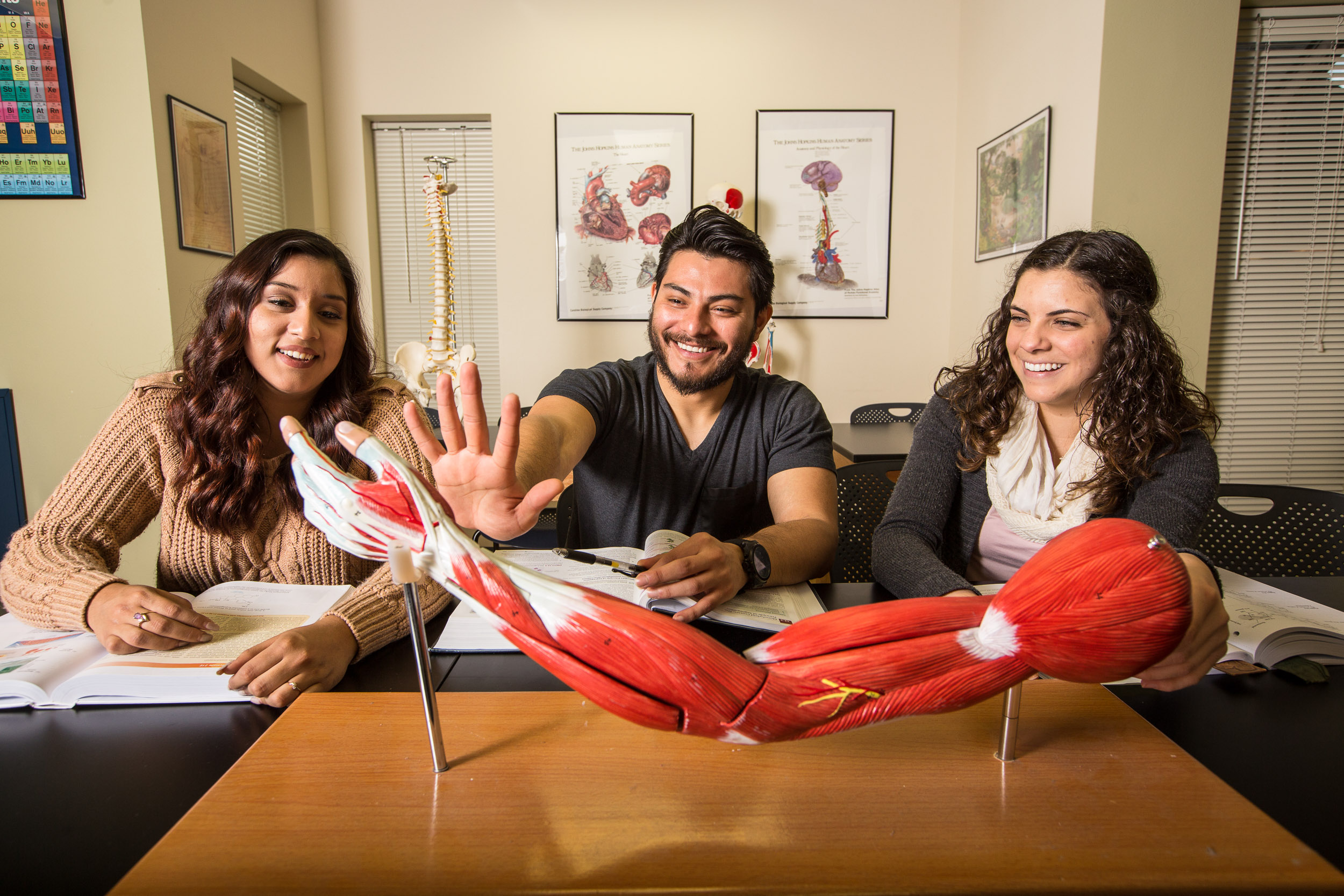
Biology majors complete hands-on research or internship experience before graduation

What You’ll Study
How the Curriculum is Structured
The curriculum provides comprehensive preparation in counseling theory, child and adolescent development, assessment, ethics, and school-based intervention strategies. Coursework addresses counseling practice across elementary, middle, and high school contexts while emphasizing multicultural competencies, advocacy, and collaboration with families and school personnel. Instruction integrates research literacy, instructional strategies, and professional identity development to prepare you for the multifaceted role of the school counselor. Course content is designed to build upon prior graduate-level mental health training and apply that foundation specifically to educational settings.

Teaching Practicum
Experiential learning is a central component of the School Counseling Certificate. You complete a supervised teaching practicum during the second semester, consisting of a minimum of 200 clock hours in an accredited school, including 75 hours of full instructional responsibility. In addition, you engage in 600 hours of school counseling internship, supervised by a licensed school counselor and supported by a Bushnell Field Supervisor. Internship experiences are divided equally between elementary and secondary settings to ensure comprehensive preparation

Career Outcomes & Professional Pathways
Completion of the School Counseling Certificate prepares you for professional practice as a school counselor in K–12 public or private schools. As a graduate, you will be equipped to provide academic guidance, career development support, and personal/social counseling services within school communities. Professional roles emphasize collaboration with educators, families, and community partners, as well as participation in school leadership, student assistance programs, and comprehensive counseling initiatives that support student learning, development, and well-being
What Can You Do with a School Counseling Certificate? (Widget)
Accreditation
Bushnell University’s School Counseling programs are accredited by the Oregon Teacher Standards and Practices Commission (TSPC). This accreditation affirms that the program meets state standards for the preparation of professional school counselors and aligns with licensure requirements established by the Oregon Educational Act for the 21st Century. Accreditation ensures that curriculum, clinical practice, and faculty oversight support the competencies required for effective school counseling practice in PK–12 educational settings.
Admissions Requirements
Admission to the School Counseling Certificate requires completion of a bachelor’s degree from a regionally accredited institution with a minimum 3.0 GPA and prior graduate preparation in a mental health–related field. Required materials include official transcripts, a statement of purpose, a current résumé, one letter of recommendation, two disposition assessments, and a personal interview with the admissions committee. An upper-division course in human development or equivalent is required and may be completed concurrently in the first semester.
Tuition, Financial Aid & Scholarships
The School Counseling Certificate consists of 33 credits billed at the graduate per-credit tuition rate. Tuition and fee information is published annually and applies equally to certificate and degree-seeking school counseling students. Financial support options may include federal financial aid, military and veteran benefits, and institutional scholarships such as the Pathways in Education Scholarship.
I particularly liked the small class sizes and the professors’ willingness to regularly engage with the class over science or life. I can also attest to the professors’ intentional efforts to form relationships and help mentor and guide students towards their vocation and calling.”

Frequently Asked Questions?
The certificate includes authorization-level coursework and internship experiences in both early childhood/elementary and middle school/high school settings. This structure ensures exposure to multiple developmental stages and school environments. Internship placement sites are selected to meet program requirements and align with Teacher Standards and Practices Commission expectations, while also considering professional goals when possible. Course availability and placement details may change in response to licensure standards or school partnership availability.
Yes. The School Counseling Certificate is designed to meet Oregon licensure requirements for a PK–12 Preliminary School Counseling License, in accordance with standards established by the Teacher Standards and Practices Commission (TSPC). Candidates are responsible for completing all required coursework, clinical experiences, and state-mandated testing and compliance requirements.
Coursework is scheduled one evening per week in a hybrid format that supports working professionals. However, practicum and internship experiences take place during the regular school day. Many students continue working while enrolled but may need to adjust their schedules to meet field-based requirements.
Contact Us
Have questions about Bushnell’s School Counseling Certificate? An admissions counselor can walk you through requirements, discuss transfer credits, and help you figure out your next step.
Our faculty and staff are 100% committed to your learning and invested in your success.
Come learn with us!
Related News

Faculty Features: Shirley Lathrop, MAT, M.S.
Shirley Lathrop, MAT, M.S., is the program lead for the School Counseling program at Bushnell University. She brings to the role a wealth of direct school counseling experience and a…
Read More
Bringing Joy to Campus: The Bushnell Nerf Club Experience
EUGENE, Ore. – Connecting community, impacting youth, and having fun while doing it; Meet the Bushnell Nerf Club. This club creates opportunities for students to have fun, destress and grow…
Read More
Q and A with Assistant Professor Ally Goertzen
Ally Goertzen is an assistant professor of school counseling at Bushnell University and has been at the university since 2019. In this Q and A, she shares her role at…
Read More
Next Steps
Interested in becoming a part of the Beacon community? We’re here to answer questions and help you see if Bushnell is right for you.