


Why Choose School Counseling at Bushnell?
Small cohorts, personalized faculty mentorship, and extensive field experiences prepare you to make a meaningful difference in the lives of students. Bushnell’s Master of Arts in School Counseling combines counselor preparation, student advocacy, and supervised school-based experiences to prepare graduates for Oregon licensure and meaningful careers supporting K–12 students.
Learn from experienced educators and licensed school counselors who invest personally in your success. Evening classes, a collaborative cohort model, and individualized mentorship create an engaging learning environment that supports you from admission through graduation.
Through practicum and internship placements in elementary and secondary schools, you’ll apply counseling theories, intervention strategies, consultation skills, and student advocacy practices in authentic educational settings while preparing for Oregon school counselor licensure.
600
Hours of supervised internship experience
K–12
School counseling licensure preparation
24 Months
To complete your master’s degree
What You’ll Study
A curriculum designed to prepare you for Oregon school counselor licensure.
Develop the knowledge and skills needed to support the academic, social, emotional, and career development of K–12 students. Bushnell’s School Counseling curriculum combines counseling theory, child and adolescent development, ethics, assessment, and leadership with practical learning that prepares you for today’s school environments.
Course Highlights
- Counseling Theory & Helping Relationships
- Child & Adolescent Development
- School-Based Counseling & Student Advocacy
- Career Development & College Readiness
Clinical Practice
Gain hands-on experience through supervised practicum and internship placements in elementary and secondary schools. Working alongside licensed school counselors, you’ll apply classroom learning while building the counseling, advocacy, consultation, and leadership skills needed to support K–12 students.
Program Pathways
Tailor your School Counseling experience to your professional background and career goals. Whether you’re a licensed teacher, transitioning into school counseling, or already hold a qualifying graduate counseling degree, Bushnell offers a pathway that prepares you for meaningful work supporting K–12 students.
Track I Pathway
For licensed teachers with at least two years of classroom experience seeking initial Oregon school counselor licensure through advanced counseling coursework and supervised field experiences.
Track II Pathway
Designed for students without a qualifying teaching license, Track II includes additional coursework and classroom practicum to prepare graduates for Oregon school counselor licensure.
School Counseling Certificate
For professionals who already hold a qualifying graduate counseling degree and want to pursue Oregon school counseling licensure through specialized coursework.
Admissions and Program Resources
Explore the admissions process, licensure requirements, tuition information, and other resources to help you prepare for Bushnell’s M.A. in School Counseling.
Your investment includes tuition along with educational expenses such as books, technology fees, and other program-related costs. Bushnell’s admissions and financial aid teams are available to help you understand tuition, estimate your total costs, and explore available funding options.
Per Semester:
Housing & Food: $5,650
Books & Supplies: $55 per credit
Personal: $700
Transportation: $700
Tech Fee: $175
Bushnell is committed to making graduate education accessible and affordable. Learn more about Graduate Financial Aid and explore employer tuition assistance, military and veteran education benefits, scholarships, and other funding opportunities. Our admissions team can help you identify the resources that best fit your goals and financial situation.
Accreditation

Bushnell University’s School Counseling programs are accredited by the Oregon Teacher Standards and Practices Commission (TSPC), ensuring they meet the highest standards for preparing professional school counselors.
These programs are designed to equip students with the skills and knowledge needed to support the success of K-12 students.
Admissions and Program Resources
Explore the admissions process, licensure requirements, tuition information, and other resources to help you prepare for Bushnell’s M.A. in School Counseling.
Your investment includes tuition along with educational expenses such as books, technology fees, and other program-related costs. Bushnell’s admissions and financial aid teams are available to help you understand tuition, estimate your total costs, and explore available funding options.
Per Semester:
Housing & Food: $5,650
Books & Supplies: $55 per credit
Personal: $700
Transportation: $700
Tech Fee: $175
Bushnell is committed to making graduate education accessible and affordable. Learn more about Graduate Financial Aid and explore employer tuition assistance, military and veteran education benefits, scholarships, and other funding opportunities. Our admissions team can help you identify the resources that best fit your goals and financial situation.
Accreditation
Bushnell University’s School Counseling programs are accredited by the Oregon Teacher Standards and Practices Commission (TSPC), ensuring they meet the highest standards for preparing professional school counselors.
These programs are designed to equip students with the skills and knowledge needed to support the success of K-12 students.
Career Outlook
What Can You Do with a Master of Arts in School Counseling?
Students who graduate from the school counseling program at Bushnell go on to pursue these types of careers:
- School Counselor (Elementary)
- School Counselor (Middle School)
- School Counselor (High School)
- College & Career Readiness Coordinator
- Student Support Services Coordinator
- Educational Leadership or Doctoral Study
Skills You’ll Gain
Through Bushnell’s School Counseling program, you’ll develop practical and career-ready skills, including:
- Apply counseling theories in K–12 school settings
- Support students’ academic, social, emotional, and career development
- Conduct student assessments and develop intervention plans
- Collaborate effectively with families, educators, and community partners
- Respond to student crises using ethical and trauma-informed practices
- Advocate for equitable student success and well-being

What drew me to Bushnell was the supportive community and the faculty who genuinely invest in student success. Throughout the program, I’ve learned from professors who care deeply about their students while studying alongside a passionate cohort that challenges and encourages me every step of the way.”

One of the most valuable parts of the program was learning alongside classmates with diverse experiences and perspectives. The relationships I built continue today, both personally and professionally, and many of my colleagues in the field are fellow Bushnell graduates.”

The coursework was directly connected to the responsibilities I now have as a school counselor, and I still reference materials, projects, and resources from the program today. Every course helped me build skills and confidence that continue to serve me in my career.”
Frequently Asked Questions
A Master’s in School Counseling prepares graduates to pursue licensure and work as school counselors in public and private K–12 schools. School counselors support students’ academic success, social-emotional development, career exploration, and overall well-being while collaborating with families, educators, and community partners.
Bushnell’s Master of Arts in School Counseling can typically be completed in as few as 24 months (five semesters). The program is designed for working professionals and features evening classes, a cohort model, and supervised field experiences that prepare students for school counseling licensure.
Students complete 600 hours of supervised internship experience in elementary and secondary school settings under the guidance of licensed school counselors and Bushnell faculty supervisors. Students in Track II also complete an additional 200-hour classroom practicum.
Yes. Bushnell University’s Master of Arts in School Counseling program is accredited by the Oregon Teacher Standards and Practices Commission (TSPC) and prepares graduates to pursue Oregon school counseling licensure for K–12 school settings.
Track I is designed for licensed teachers with at least two years of successful teaching experience. Students who do not meet those requirements may qualify through Track II, which includes additional coursework and classroom practicum experiences to prepare for school counseling licensure.
Contact Us

Have questions about Bushnell’s School Counseling program? Your admissions counselor can walk you through requirements, discuss transfer credits, and help you figure out your next step.
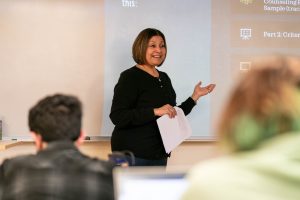
Learn from experienced educators and licensed school counselors!
Related News

Faculty Features: Shirley Lathrop, MAT, M.S.
Shirley Lathrop, MAT, M.S., is the program lead for the School Counseling program at Bushnell University. She brings to the role a wealth of direct school counseling experience and a…
Read More
Bringing Joy to Campus: The Bushnell Nerf Club Experience
EUGENE, Ore. – Connecting community, impacting youth, and having fun while doing it; Meet the Bushnell Nerf Club. This club creates opportunities for students to have fun, destress and grow…
Read More
Q and A with Assistant Professor Ally Goertzen
Ally Goertzen is an assistant professor of school counseling at Bushnell University and has been at the university since 2019. In this Q and A, she shares her role at…
Read More
Next Steps
Interested in becoming a part of the Beacon community? We’re here to answer questions and help you see if Bushnell is right for you.