

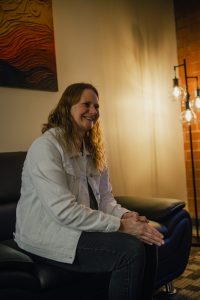
Why Choose Bushnell’s M.A. in Clinical Mental Health Counseling?
Become a counselor who is prepared to lead with both clinical excellence and compassion. Bushnell’s Clinical Mental Health Counseling program prepares you to become a compassionate, clinically skilled counselor through personalized mentorship, extensive hands-on experience, and a supportive learning community.
- Preparation for Oregon LPC licensure
- Small cohorts
- Faculty who are practicing clinicians
- Professional mentorship
- Hands-on clinical training
700+
Supervised clinical training hours, including direct client experience
100%
National Counselor Examination (NCE) pass rate during the most recent Oregon testing period
(Aug.–Dec. 2025)
91%
Graduates employed in mental health counseling positions within four months
What You’ll Study
A curriculum designed for licensure and professional counseling practice.
Study counseling theory, assessment, diagnosis, ethics, multicultural counseling, and evidence-based interventions through a curriculum that integrates classroom learning with supervised clinical experiences.
Course Highlights
- Counseling Theory & Helping Relationships
- Assessment, Diagnosis & Treatment Planning
- Group, Family &Career Counseling
- Crisis, Trauma & Addiction Counseling
Clinical Training
Gain real-world counseling experience through Bushnell’s Counseling Clinic and approved community placements, completing 700+ hours of supervised clinical training under licensed professional counselors.
Professional Development
Your education extends beyond the classroom and counseling clinic. Throughout the program, you’ll engage with the counseling profession through organizations, conferences, advocacy efforts, leadership opportunities, and faculty mentorship that strengthen your professional identity.
Depending on your interests and professional goals, opportunities may include:
- Chi Sigma Iota International Counseling Honor Society
- Oregon Counseling Association (ORCA)
- Professional counseling conferences
- Mental health advocacy and outreach initiatives
- Leadership and service opportunities
- Advanced clinical learning experiences
These experiences help you build lasting professional relationships while preparing for leadership within the counseling profession.
Program Outcomes
Bushnell’s Clinical Mental Health Counseling program consistently prepares graduates for professional counseling practice through rigorous academic preparation, individualized faculty mentorship, and extensive supervised clinical experience.
100%
National Counselor Examination (NCE) pass rate during the most recent Oregon testing period (August–December 2025)
91%
Graduates employed in mental health counseling positions within four months of graduation
95%
Program completion rate within approximately 2.5 years
700+
Hours of supervised clinical training completed before graduation
Planning Your Degree
Find everything you need to know about program requirements, CACREP accreditation, clinical training, tuition, and the path to Oregon Licensed Professional Counselor (LPC) licensure as you prepare for a career in clinical mental health counseling.
Complete the 60-credit master’s degree in approximately 28 months through a hybrid cohort model that combines evening in-person classes with synchronous and asynchronous online learning. This format allows many students to continue working while building meaningful relationships with faculty and classmates throughout the program.
Beginning in your second year, you’ll complete supervised practicum and internship experiences through Bushnell’s onsite Counseling Clinic and approved community behavioral health agencies. Throughout your clinical training, you’ll receive both individual and group supervision while working directly with clients in professional counseling settings.
Bushnell’s CACREP-accredited Master of Arts in Clinical Mental Health Counseling satisfies Oregon’s educational requirements for Licensed Professional Counselor (LPC) licensure. Graduates are prepared to pursue Oregon licensure by completing the required post-graduate supervised clinical experience and successfully passing the National Counselor Examination (NCE), as established by the Oregon Board of Licensed Professional Counselors and Therapists (OBLPCT). This clear pathway to LPC licensure makes Bushnell an excellent choice for students seeking a master’s in counseling in Oregon.
One of the defining strengths of Bushnell’s Clinical Mental Health Counseling program is the close relationship students develop with faculty throughout the cohort experience. Faculty members are experienced counselor educators and practicing clinicians who provide individualized mentorship, clinical supervision, and professional guidance from your first semester through graduation.
Core Faculty
- Angela Burdick-McPhee, Ph.D., LPC, NCC – Assistant Professor of Clinical Mental Health Counseling
- Darleen Dempster, Ph.D., LPC, NCC – Associate Professor of Clinical Mental Health Counseling
- Ashley Jackson, Ph.D., LPC, NCC – Assistant Professor of Clinical Mental Health Counseling
- Gene James, Ph.D., LPC, NCC – Associate Professor of Clinical Mental Health Counseling
- Marilyn Montgomery, Ph.D., LPC, NCC, BCC – Program Director and Professor of Clinical Mental Health Counseling
Affiliate Faculty/Staff
- Mindi Barta, M.A., LPC, NCC – Adjunct Faculty
- Devon Halleman, M.A. – Interim Program Coordinator and Adjunct Faculty
- Samatha Silver, M.A. – CMHC Clinic Director and Fieldwork Coordinator
- Rebecca Tsuchiya, M.S. – Affiliate Faculty
- Abraham Cazares-Cervantes, Ph.D. – Adjunct Faculty
- Tammy Hatling, M.A. – Academic Advisor
Your investment includes tuition along with educational expenses such as books, technology fees, and other program-related costs. Bushnell’s admissions and financial aid teams are available to help you understand tuition, estimate your total costs, and explore available funding options
Per Semester:
Housing & Food: $5,650
Books & Supplies: $55 per credit
Personal: $700
Transportation: $700
Tech Fee: $175
Bushnell is committed to making graduate education accessible and affordable. Learn more about Graduate Financial Aid and explore employer tuition assistance, military and veteran education benefits, scholarships, and other funding opportunities. Our admissions team can help you identify the resources that best fit your goals and financial situation.
Career Outlook
What Can You Do with a Clinical Mental Health Counseling Degree?
After completing the program and meeting Oregon licensure requirements, you’ll be prepared to serve clients in a variety of behavioral health settings, including:
- Licensed Professional Counselor (LPC)*
- Clinical Mental Health Counselor
- Community Mental Health Counselor
- Behavioral Health Clinician
- Crisis Intervention Counselor
- Private Practice Counselor*
*Following completion of Oregon licensure requirements.
Skills You’ll Gain
Through Bushnell’s Clinical Mental Health Counseling program, you’ll develop the clinical knowledge, counseling techniques, and professional skills needed for effective, ethical practice, including:
- Conduct comprehensive clinical assessments and case conceptualization
- Develop evidence-based treatment plans for diverse client populations
- Apply trauma-informed and culturally responsive counseling practices
- Facilitate individual, group, and family counseling interventions
- Navigate ethical, legal, and professional counseling standards
- Build therapeutic relationships that promote client wellness
Where Our Graduates Go
Bushnell graduates are making a difference across Oregon’s behavioral health landscape. Alumni serve individuals, families, and communities through nonprofit organizations, community mental health agencies, integrated healthcare systems, and counseling practices, building on the clinical training, faculty mentorship, and professional preparation they received at Bushnell.
Recent graduates have launched careers with organizations including:
- Looking Glass
- Cascade Health
- Options Counseling & Family Services
- Jasper Mountain
- Christians As Family Advocates (CAFA)
- Riverview Center for Growth
- Arise Counseling Service
- Alive Counseling Clinic
- Direction Service
Accreditation
Bushnell University’s Master of Arts Degree in Clinical Mental Health Counseling is accredited by the Council for Accreditation of Counseling and Related Educational Programs (CACREP), a specialized accrediting body recognized by the Council for Higher Education Accreditation (CHEA). Learn more about CACREP and its standards.
Bushnell University’s Master of Arts in Clinical Mental Health Counseling Program is approved by the Oregon Board of Licensed Professional Counselors and Therapists (OBLPCT).

Frequently Asked Questions?
Yes. Bushnell University’s Clinical Mental Health Counseling program is accredited by the Council for Accreditation of Counseling and Related Educational Programs (CACREP), the national standard for counselor education. This accreditation supports graduates in meeting educational requirements for Oregon licensure and many other states.
Many students continue working during the program thanks to Bushnell’s hybrid format. Evening, in-person classes and online coursework provide flexibility during the first year, while the second year includes supervised practicum, internship, and clinical supervision that may require adjustments to your work schedule.
Students begin direct client work during the practicum and internship sequence in the second year of the program. Clinical experiences take place in Bushnell’s onsite Counseling Clinic and approved community placements under the supervision of licensed counseling professionals.
Bushnell’s CACREP-accredited curriculum satisfies Oregon’s educational requirements for Licensed Professional Counselor (LPC) licensure. Throughout the program, you’ll develop clinical competencies, complete supervised field experiences, and prepare for the National Counselor Examination (NCE) while building the professional identity needed for successful counseling practice.
The program emphasizes counseling as both a professional practice and a formative process. Coursework, supervision, and experiential requirements encourage self-awareness, ethical reflection, and engagement with personal values and worldview. Students are required to participate in individual counseling as a client and to engage in reflective supervision, supporting the development of professional identity, cultural humility, and ethical counseling practice aligned with professional standards.
Contact Us

Have questions about Bushnell’s Clinical Mental Health Counseling program? Your admissions counselor can walk you through admission requirements, answer your questions, and help you take the next step toward becoming a Licensed Professional Counselor (LPC).
Learn from experienced counselor educators who are invested in your personal, clinical, and professional growth.
Related News

Bushnell’s Clinical Mental Health Counseling Program Thrives
In October of 2000, Bushnell University received approval from the Northwest Association of Schools and Colleges to introduce a new graduate degree program: Master of Arts in Mental Health Counseling….
Read More
Bushnell University Celebrates Enrollment Surge for 2023-24
EUGENE, Ore. – Bushnell University is thrilled to announce record-breaking enrollment figures for the 2023-2024 academic year, marking a monumental achievement in the institution’s history. The university has seen unprecedented…
Read More
Bushnell University and Douglas ESD Expand Counseling and Mental Health Programs with New $7 million Federal Grant
Eugene, OR— Feb 5, 2023– Bushnell University is excited to announce a new partnership with Douglas Education Service District (DESD) to give educational opportunities for students in the local Douglas…
Read More
Next Steps
Interested in becoming a part of the Beacon community? We’re here to answer questions and help you see if Bushnell is right for you.