
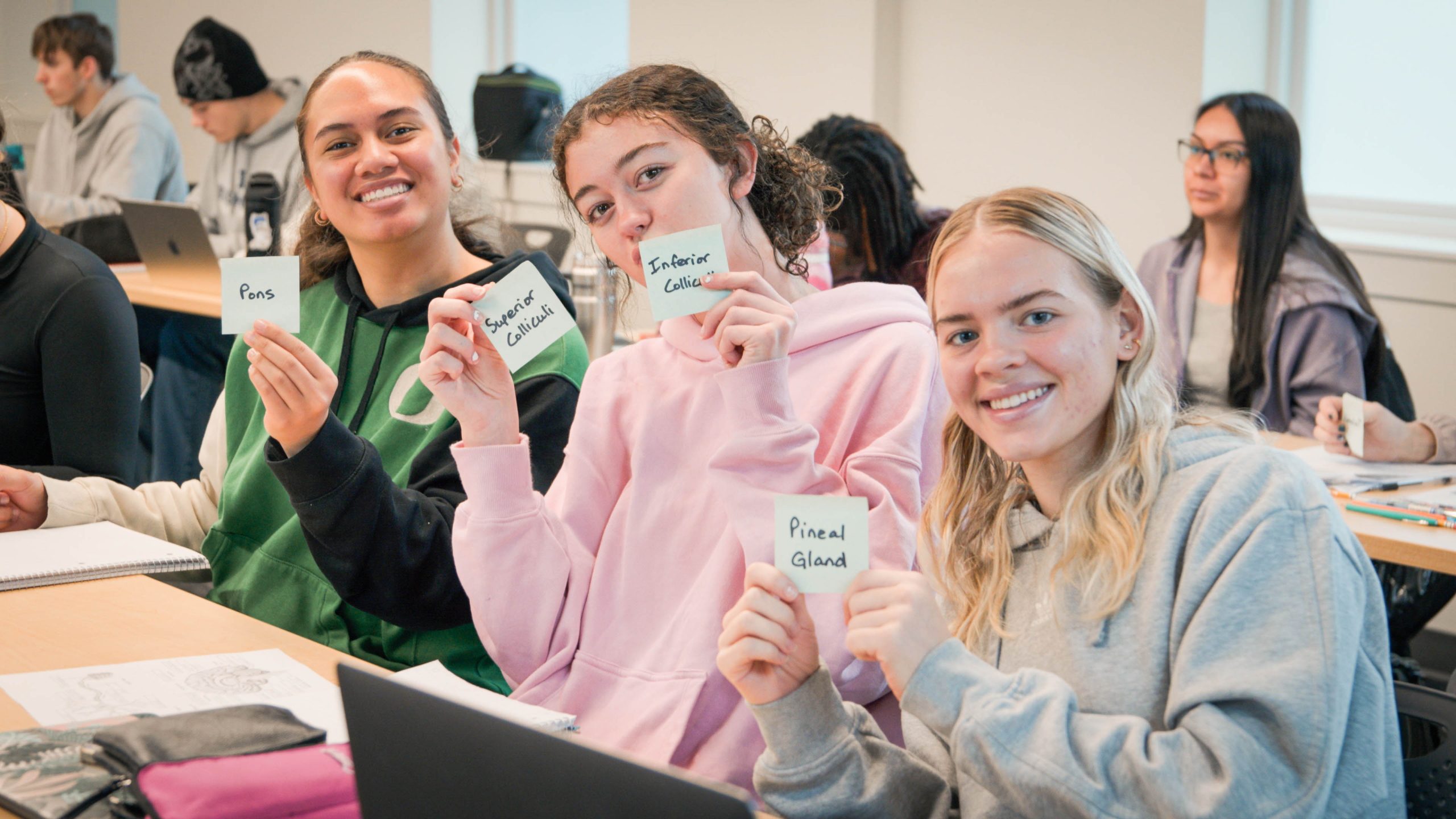

Why Choose Psychology at Bushnell?
Personalized faculty mentorship, hands-on learning experiences, and flexible pathways help you turn your interest in people into meaningful career opportunities. At Bushnell, you’ll study psychology in a supportive learning environment where faculty know you by name and help you connect classroom learning to real-world challenges.
You’ll have opportunities to explore specialized interests through concentrations in Forensic Psychology and Neuroscience, pursue internships that align with your career goals, and develop practical skills employers value. Whether you’re interested in mental health, criminal justice, healthcare, business, education, ministry, or graduate school, you’ll graduate with the knowledge, experience, and confidence to take the next step.
77%
of psychology students score 73% or higher across national exam benchmarks
18-19
concentration credits allow specialization in forensic psychology or neuroscience
36-39
credits of psychology coursework build a comprehensive foundation in psychological science

Internship Experience
You’ll gain hands-on experience through a supervised internship that helps you apply psychological concepts in professional settings. Internship opportunities may include mental health organizations, healthcare systems, nonprofit agencies, social service organizations, correctional settings, schools, and community programs.
Recent internship sites have included PeaceHealth, Lane County, Eugene Mission, Looking Glass, Cascade Hospice, Postpartum Support International, and Christians As Family Advocates (CAFA). These experiences help you build professional skills, strengthen your resume, explore career interests, and prepare for graduate study or employment after graduation.

What You’ll Study
How the Curriculum is Structured
The Psychology curriculum combines foundational coursework in human behavior, mental processes, development, research methods, and psychological theory with opportunities to explore specialized areas of interest. You’ll study cognitive, biological, social, developmental, and abnormal psychology while building skills in critical thinking, communication, research, and ethical decision-making.
As you progress through the program, you’ll have opportunities to customize your experience through concentrations in Forensic Psychology or Neuroscience, internship experiences, and applied learning opportunities. Coursework is designed to help you understand people more deeply while preparing for careers, graduate study, and meaningful service in a variety of professional settings.
Concentrations & Pathways
Forensic Psychology Concentration
The Forensic Psychology concentration explores how psychology intersects with the criminal justice system. You’ll examine topics such as criminal behavior, trauma, victim advocacy, assessment, and rehabilitation while learning how psychological principles are applied in legal and correctional settings. Through coursework and internship opportunities, you’ll gain insight into careers in corrections, victim services, law enforcement, forensic services, and graduate study in forensic or legal psychology.
Neuroscience Concentration
The Neuroscience concentration explores the relationship between the brain, behavior, and human development. You’ll study brain structure, neuropsychological processes, cognition, and biological influences on behavior while building a strong foundation in psychology and the life sciences. Research and internship opportunities help prepare you for careers and graduate study in neuroscience, healthcare, clinical research, psychology, and other science-related fields.
General Psychology Pathway
The General Psychology pathway provides a broad and flexible foundation in psychological science while allowing you to tailor your coursework to your interests and career goals. You’ll explore topics such as human development, cognition, personality, social behavior, and research methods while building valuable skills in communication, critical thinking, and problem-solving. This pathway is ideal if you’re interested in careers in human services, business, education, ministry, healthcare, or graduate study.
Pre-Law Pathway
As a Psychology major, you can pursue Bushnell University’s Pre-Law Pathway while studying human behavior, decision-making, and communication. You’ll strengthen skills in critical thinking, argumentation, public speaking, and conflict resolution while working with faculty advisors to prepare for law school. This interdisciplinary pathway provides strong preparation for careers in law, public policy, advocacy, criminal justice, and related professional fields.
Graduate Career Ready
What Can You Do with a Degree in Psychology?
Students who graduate from the psychology program at Bushnell go on to pursue these types of careers:
- Mental Health, Human Services, or Social Services Professional
- Human Resources, Training, or Organizational Development Specialist
- Law Enforcement, Criminal Justice, or Victim Advocacy Professional
- Business, Marketing, or Sales Professional
- Ministry, Community Outreach, or Nonprofit Leader
- Graduate Study in Counseling, Psychology, Social Work, Education, Business, or Related Fields
Skills You’ll Gain
Through Bushnell’s Psychology program, you’ll develop practical and career-ready skills, including:
- Analyze human behavior and psychological processes
- Apply research and critical thinking to real-world challenges
- Communicate effectively with diverse individuals and groups
- Interpret psychological research and data
- Evaluate ethical issues and make informed decisions
- Apply psychological principles in professional and community settings
Where Our Graduates Go
Bushnell Psychology graduates apply their understanding of human behavior, communication, and research across a wide range of professions and graduate programs. Alumni have pursued careers in health and medical services, law and law enforcement, ministry, social and human services, sport and fitness, business, education, counseling, research, and community leadership.
Many graduates continue their education through competitive graduate and professional programs, including:
- Bushnell University (Clinical Mental Health Counseling)
- University of Oregon (Sports Marketing)
- George Fox University (Physical Therapy)
- George Fox University (Clinical Mental Health Counseling)
- Arizona State University (Social Work)
- Portland State University
- University of Portland
- University of Southern California Rossier School of Education
- Dankook University
Whether pursuing careers directly after graduation or continuing into advanced study, Psychology graduates leave Bushnell prepared to understand people, solve complex problems, and make a meaningful impact in their communities and professions.



Frequently Asked Questions?
A Psychology degree from Bushnell University prepares you for careers in human services, healthcare, business, education, ministry, criminal justice, community advocacy, and social services. Graduates pursue roles such as case managers, behavioral health professionals, victim advocates, human resources specialists, research assistants, and community outreach coordinators. The program also provides strong preparation for graduate study in counseling, psychology, social work, education, and related fields.
Yes. Psychology students complete a supervised internship that connects classroom learning to real-world experience. Internship opportunities may include mental health organizations, healthcare systems, nonprofit agencies, correctional settings, schools, and community service organizations. These experiences help you build professional skills, explore career interests, strengthen your resume, and prepare for graduate study or employment after graduation.
Absolutely. Bushnell’s Psychology program develops the research, communication, analytical, and critical-thinking skills needed for success in graduate education. Graduates have continued their studies in counseling, psychology, social work, education, business, and healthcare-related fields at institutions such as the University of Oregon, George Fox University, Arizona State University, Portland State University, the University of Southern California, and Bushnell University.
Bushnell’s Psychology program combines scientific study, hands-on learning, and a Christian worldview within a supportive learning environment. You’ll learn from faculty who invest personally in your success while gaining practical experience through internships, concentrations in Forensic Psychology or Neuroscience, and opportunities to connect psychological principles to real-world challenges. Small class sizes and personalized mentorship help prepare you for meaningful careers and graduate study.
Contact Us
Have questions about Bushnell’s Psychology program? An admissions counselor can walk you through requirements, discuss transfer credits, and help you figure out your next step.

Our faculty and staff are 100% committed to your learning and invested in your success.
Come learn with us!
Related News

Faculty Features: Dr. Erin Mueller
“Psychology invites us to ask deep questions about what it means to be human,” says Bushnell University psychology professor Dr. Erin Mueller. Those questions are not just academic for Mueller…
Read More
Internship Insights: Olivia Clark
EUGENE, Ore. – Bushnell University alumna Olivia Clark ’24, who graduated this past spring with a Bachelor of Science in Psychology, completed her spring semester internship with the Lane County…
Read More
Next Steps
Interested in becoming a part of the Beacon community? We’re here to answer questions and help you see if Bushnell is right for you.